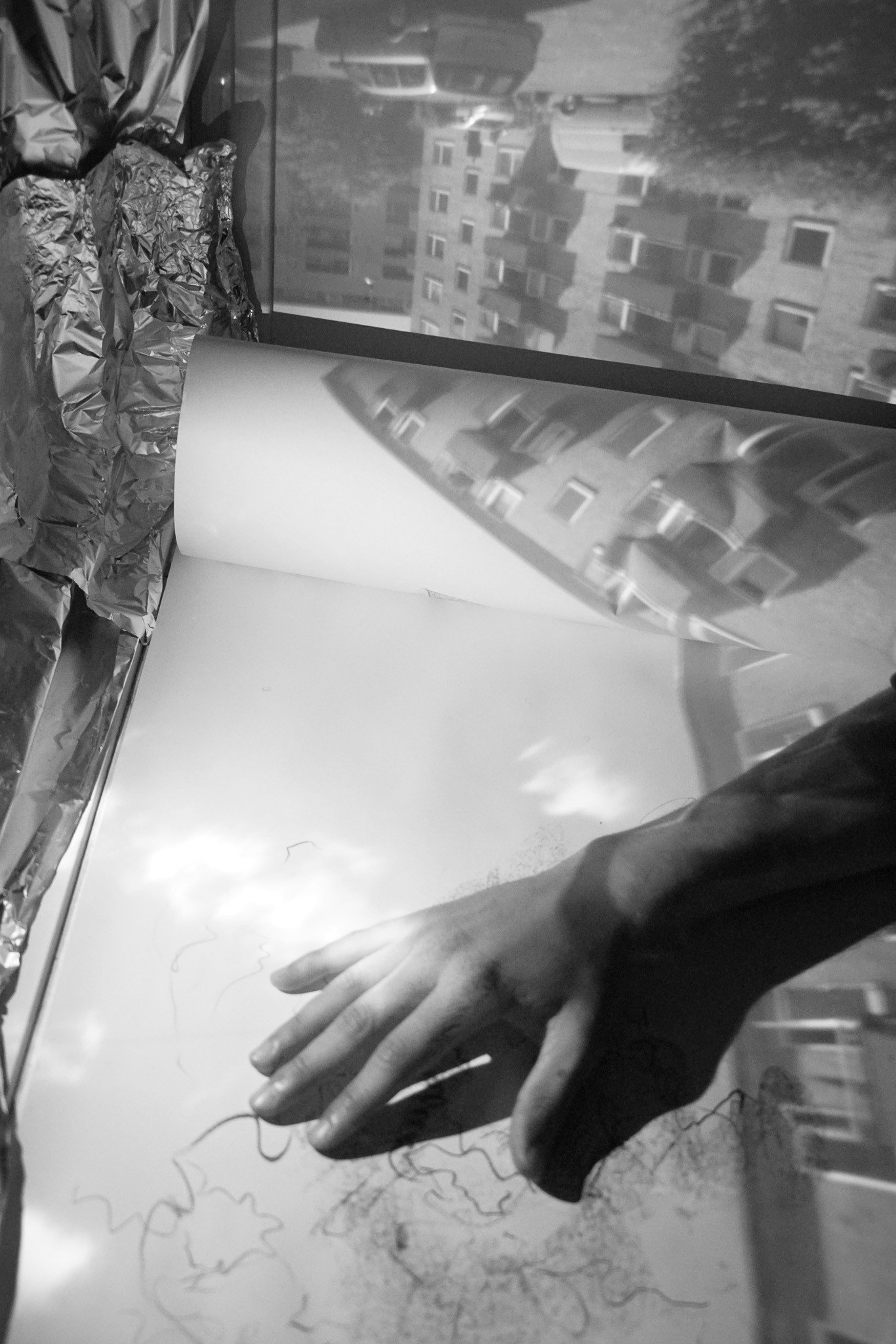
Câmara Serena,
capturing the room's soul through pinhole photography
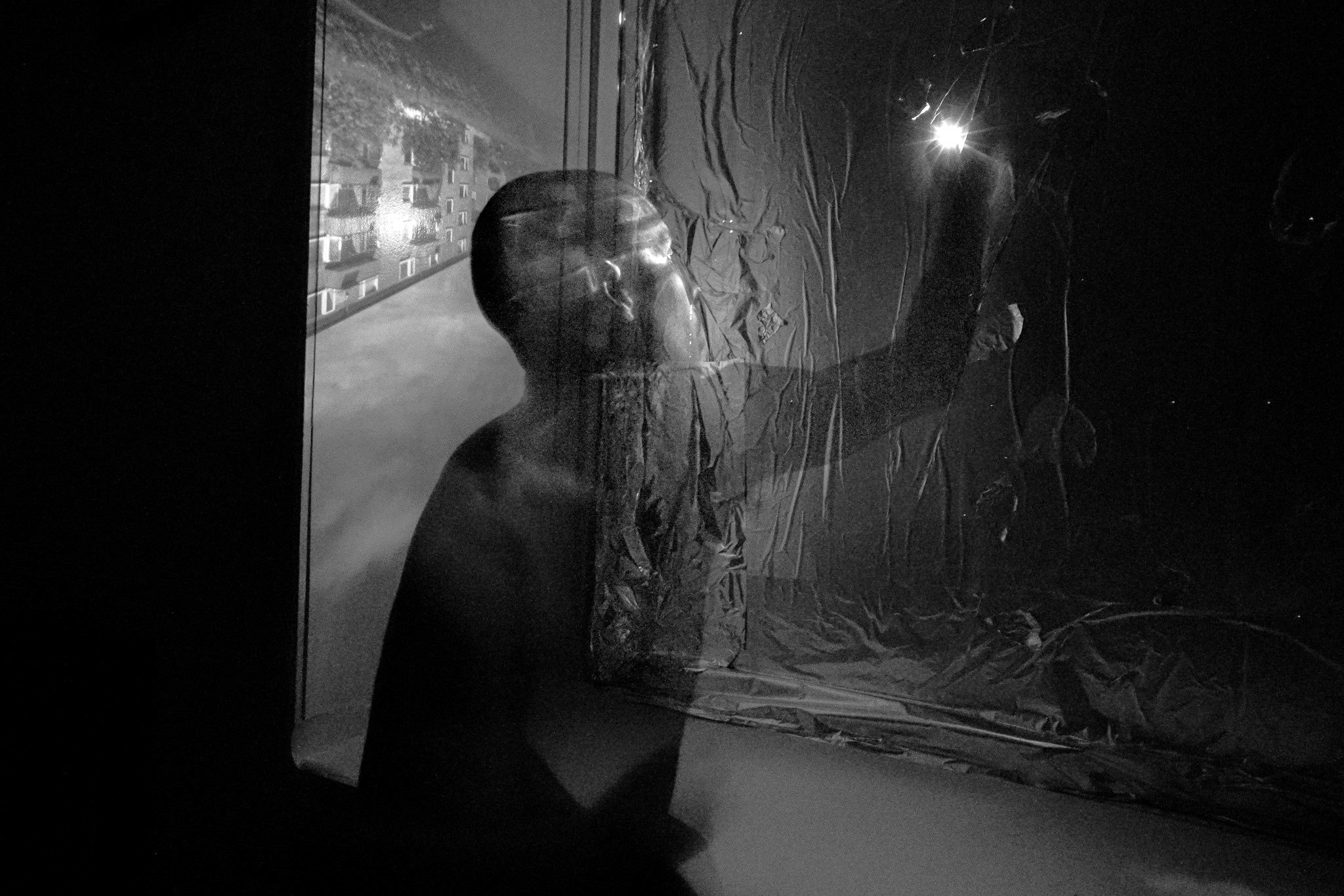
« Architecture appears for the first time when the sunlight hits a wall.» Louis Kahn
This project explores pinhole photography as a tool to study how light and the outdoor environment are projected into an interior space through windows.
A further exploration of Francisco Braga's master thesis research and concepts as a means to acquire a living memory from my room in Copenhagen.
More informations From Francisco Braga master thesis Here
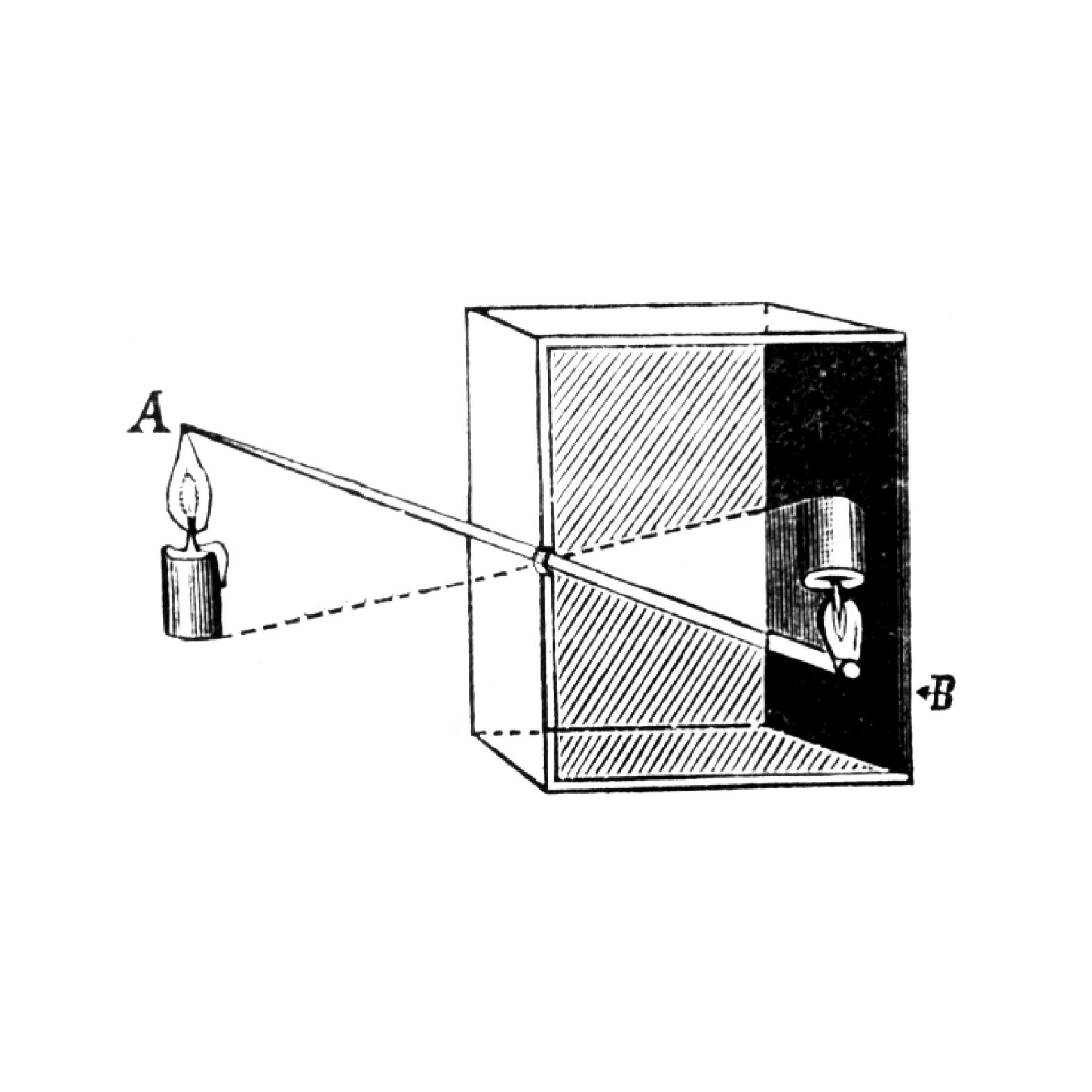
Pinhole photography is the most primitive photography technique wich consist in having a sealed box, perforated in one point. The small hole will allow a selected cone of light to enter the camera oscura recreating an upside-down projection of the external view.
Photosensible paper can be used to imprint the image projected inside the pinhole camera.
How can Photography be used to express a tridimensional space?
Since to reproduce a pinhole camera, we only need a sealed box with a small hole. Therefore, we can transform any room into a photocamera. The only requirement is to lightproof the space from any source of light pollution and then allow the light to enter from a small determined hole on an obscured window.
When we reproduce the experience we can see the oudoor environment projected on the interior surfaces.
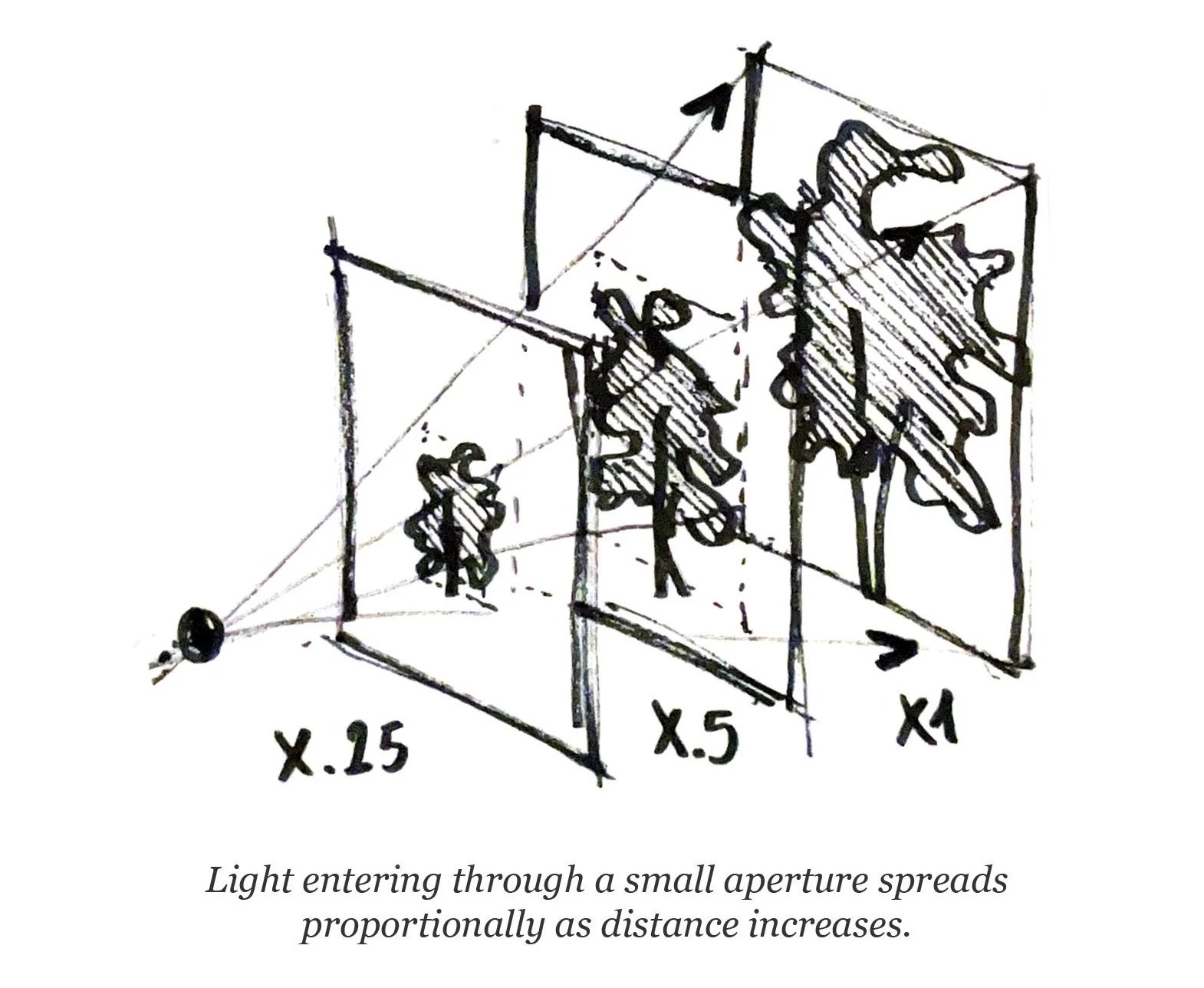
Light entering through a small aperture spreads proportionally as distance increases. When the distance between the opening and the projection surface is reduced, such as in a scaled model, the cone of light contracts accordingly, preserving the same geometric relationships. This proportional behavior allows the pinhole model to accurately reproduce how exterior scenes are projected inside a full-scale room, despite the reduced dimensions.
With Francisco, we decided to study my livingroom in a recently built residential building situated in Copenhagen; this apartment represents a typical furnished Scandinavian flat. It is a long room with a large full-height glass curtain wall spreading on almost the entire exterior surface and a glass door opening to a lateral balcony.
Light and the outdoor environment are what make this space so special, in particular thanks to the view towards the harbor. For this reason, it was selected as a study room.
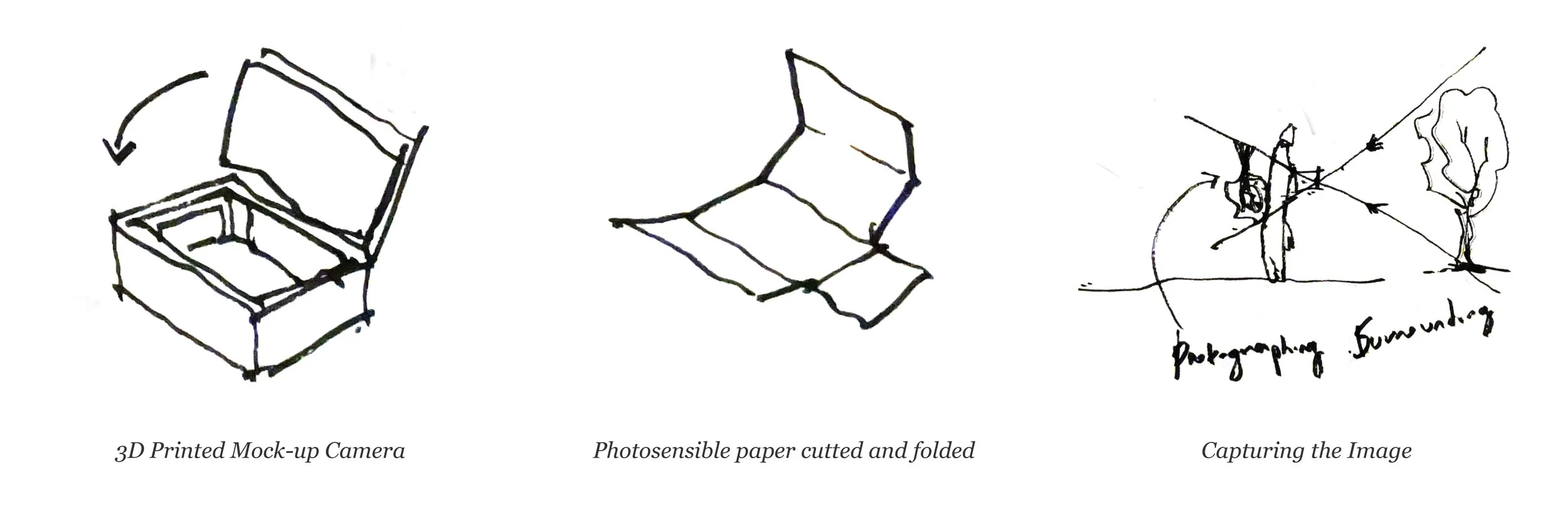
From a 3D scan of the studied space, a simplified 1:66 scale model was created. This reproduction was 3D printed and carefully made light-proof to avoid all sources of unwanted light pollution. This mockup was successively pierced by two micro-holes placed at the window locations. Photosensitive paper had to be hand cut to fit with the model dimensions.
For each picture, it’s necessary to place the paper blind folded in the camera To make sure the image is correctly printed on the paper, we took multiple shots with different time exposures (8–25 seconds).
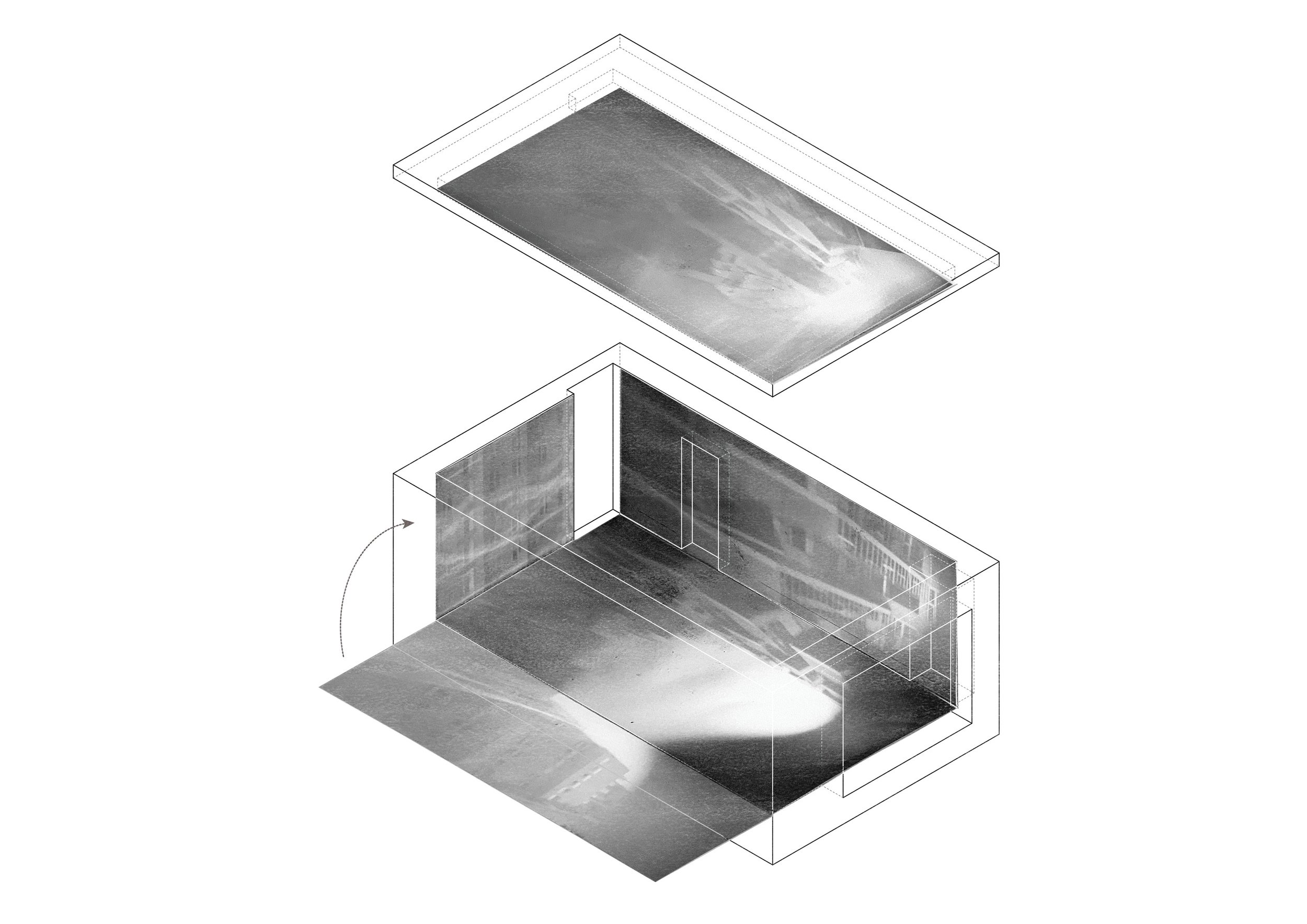
Folded picture placed inside the reduced model.
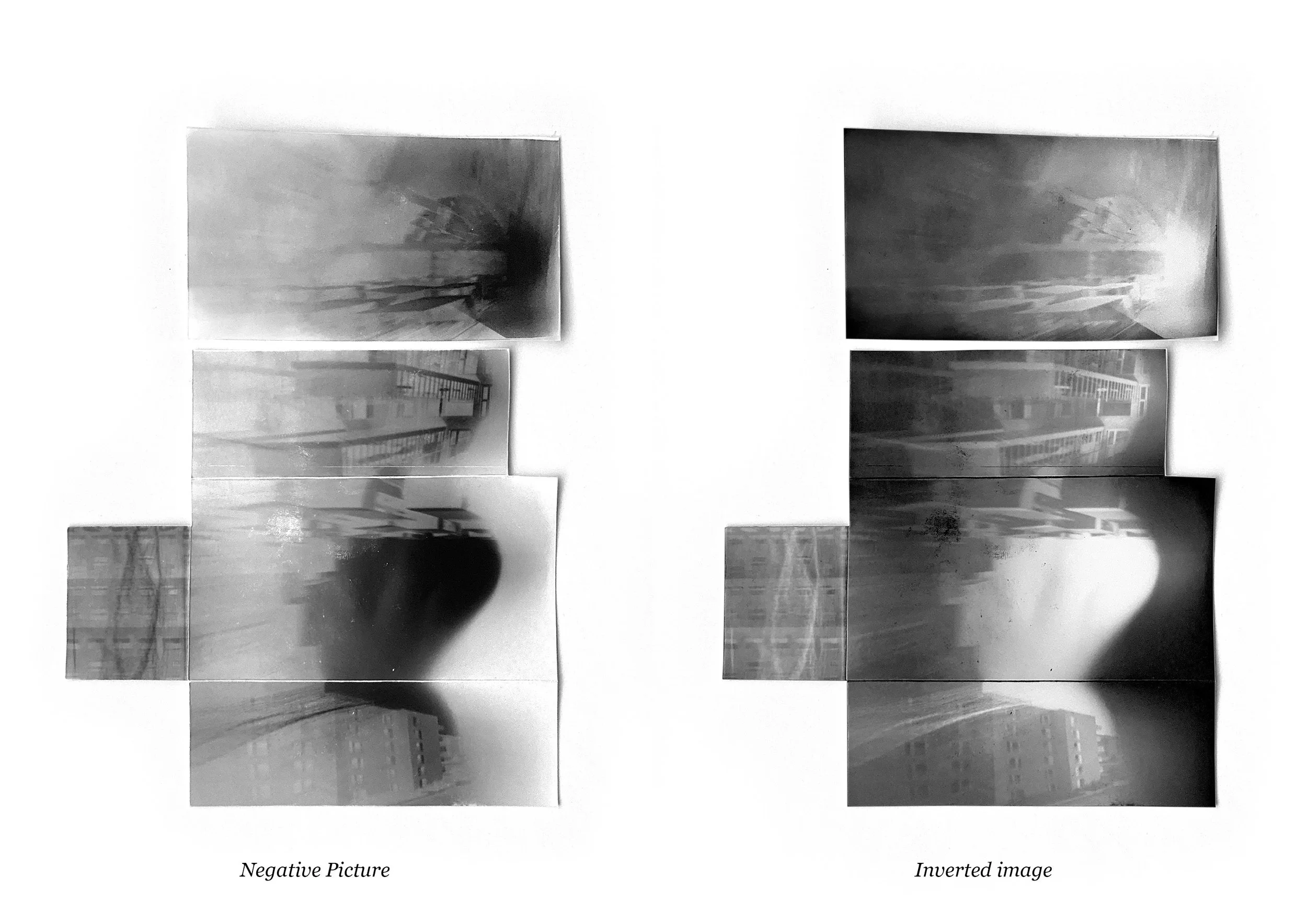
Flattened Picture_Simple Exposure (from the Curtain Wall opening)
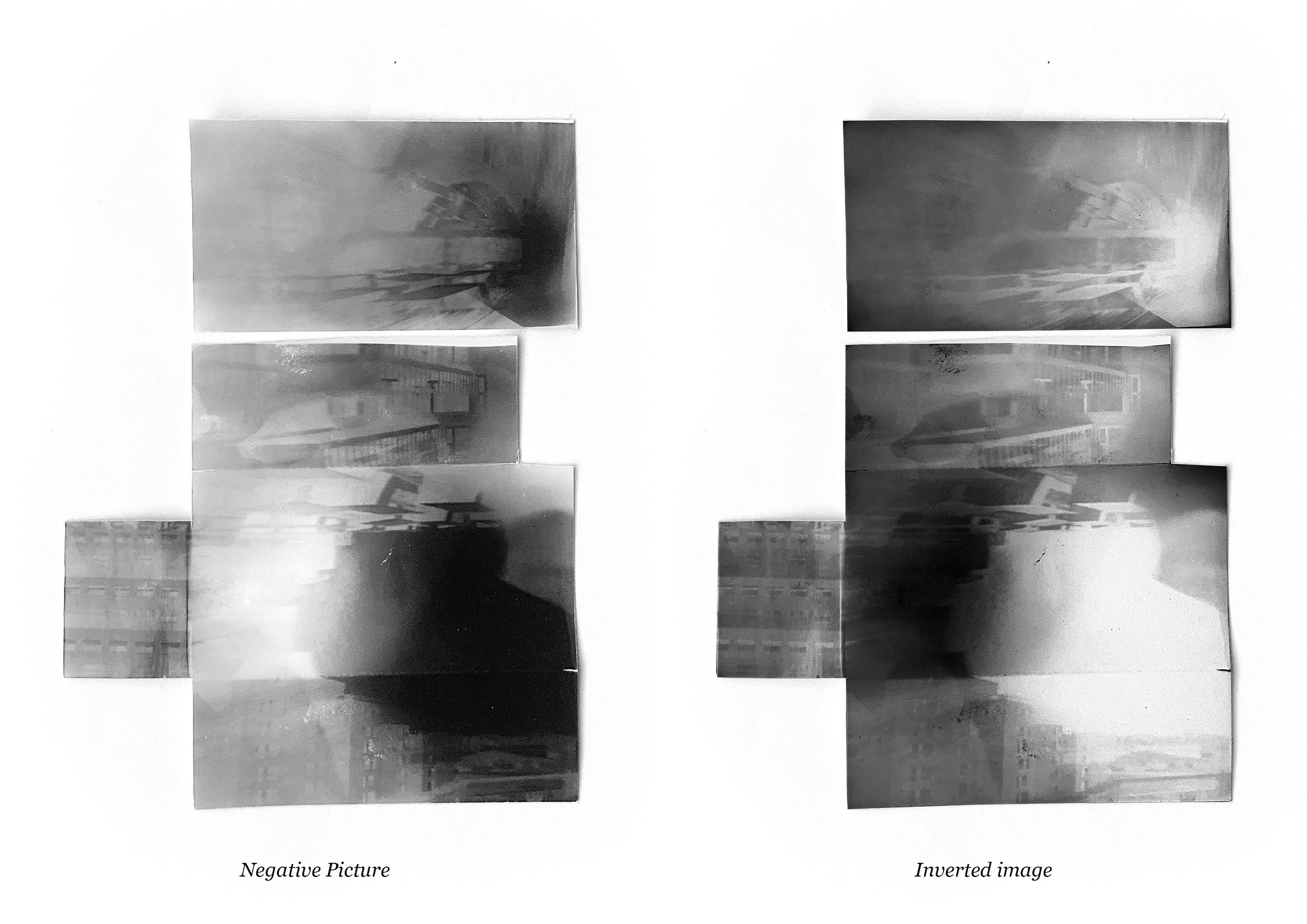
Flattened Picture_Double Exposure (from both openings)
From this experiment work our wish now is to procede with this metodology and apply it on different contexts and locations.